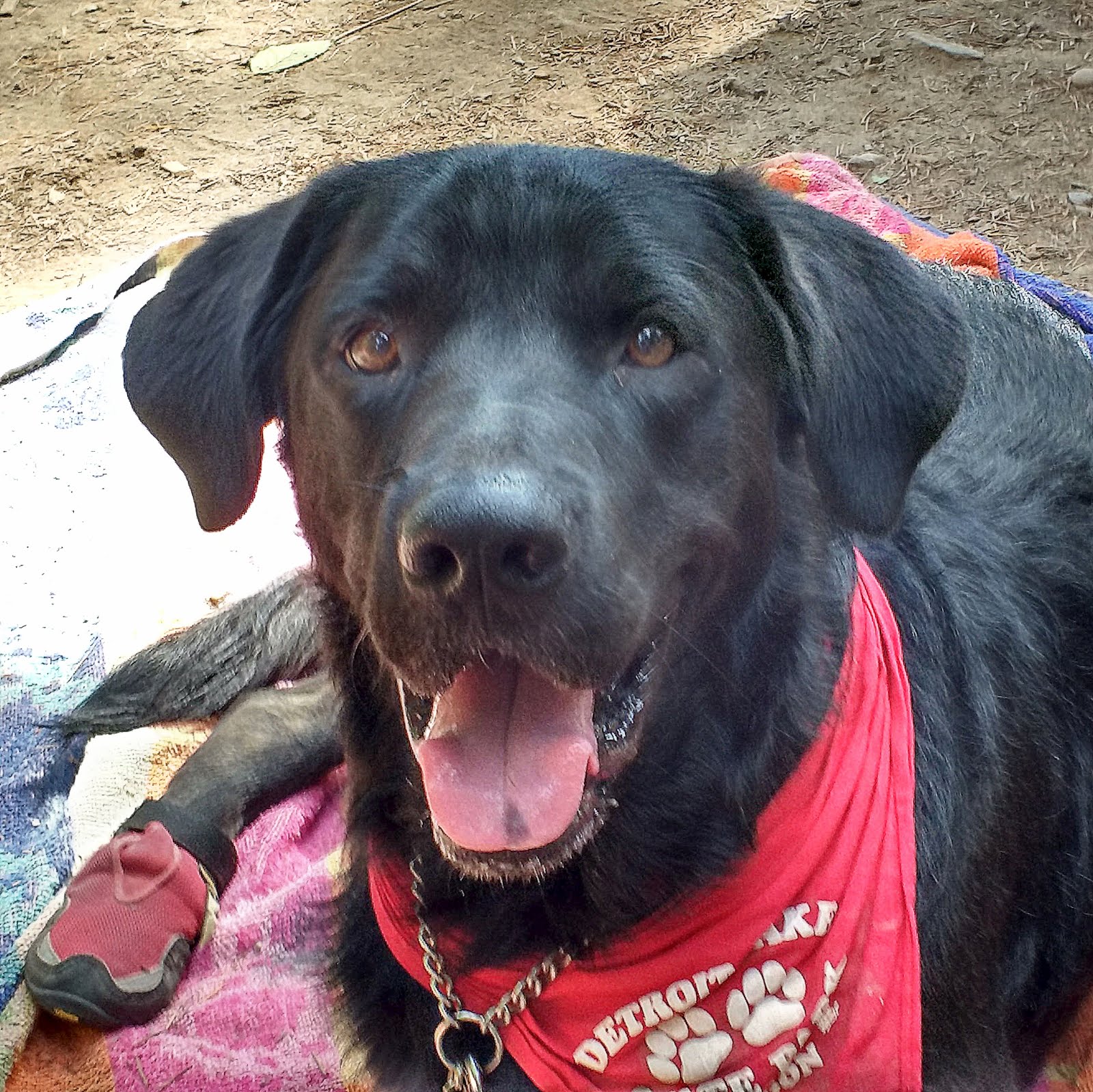
Showing posts with label dog. Show all posts

Friday, August 4, 2017

That's Not a Real Service Dog!

I never thought this would happen to me!

There are two things every service dog handler will face during almost any outing into the public: discrimination and fraud.  These two things together make it hard for people who really need a service dog when they are out.  The general public knows little about service dogs and the law that provides their protection and privilege.  Then there are some that know just enough to scam the system which is a double whammy.  


      "I honestly didn't expect to have any
           problems with going places with my 
service dog but they were there from
the outset."

As a preface, in every instance that I will describe, Rambo is dressed with his vest and Halti.  This is not to mention that, at least to the knowing eye, he behaves like a service dog in public.  That is to say, his behavior in public is really quite good.  He often exhibits better behavior in public than the children we encounter.


The foremost discrimination issue that I have run across is that most employers, including many large companies and corporations, fail miserably at training their employees about the Americans with Disabilities Act (ADA).  This becomes glaringly obvious when I try to enter a restaurant or check into a hotel with Rambo at my side.  Far too often, as soon as Rambo and I walk through the door, I see the confused look come across the people that work there.  Sometimes I get dirty looks right from the start.  I understand now that these people simply don't know any better and I blame their employer as ultimately the responsibility to follow the ADA in their establishment falls firmly in their lap.  

My understanding of discrimination and how to deal with it didn't come easy or fast.  I honestly didn't expect to have any problems with going places with my service dog but they were there from the outset.  I was forced to learn how to handle these situations or I was going to have to avoid them and avoidance wasn't a choice.  I had never experienced honest-to-goodness discrimination before I started going out in public with Rambo.  It has given me a greater appreciation of what every disabled person in this country experiences.  Now I understand the protests I see on the news when someone is discriminated against.  Its an ugly, helpless feeling that triggers anger, sadness and self doubt.  No one should ever have to feel like that simply because of who they are but it is a commonplace occurrence every minute of every day.

I'm not going to get into the intricacies of the ADA in this post.  I will explore that in greater detail at a later time.   For now, I just want to give you some examples of the situations that I have encountered and how I have dealt with them.  You may find yourself in similar situation and maybe you will find some of the things that I have done helpful for you (but I am a sarcastic, take-no-guff kind of person and my responses aren't always "polite.").   Some of these examples will be rather short and I will supply only with what was said to me and my response.  While these are all very frustrating, sometimes they can be quite funny as well.  (I'm looking at you, TSA!)  To balance things out I will include a couple of situations that really demonstrate what a properly trained, well behaved service dog can pull off in public.

The most common situation in which discrimination occurs are in restaurants.  I read news stories all the time about how someone with a legitimate service dog was denied service or even kicked out of a restaurant simply because the employee didn't know any better.  While I'm on the subject of restaurants, let me stop and ask this question:  what is it about the people in this country that they get instantly upset when they see a dog enter a restaurant?  They give me the impression that the simple presence of a dog is somehow unsanitary and dog hairs will somehow waft up from the floor and across the restaurant to land on their plate.  The ASPCA estimates that 44 percent of all American homes have a dog.  Despite a dog that goes into their kitchen, dining room and living room these people somehow manage to survive the presence of a dog.  In Europe, well behaved dogs are welcome at restaurants and no one even notices.  Only in America does this sort of nonsensical thinking become a large part of what fuels service dog discrimination in restaurants.  

One summer afternoon I drove to the Oregon coast to let Rambo play on the beach.  Afterwards I headed over to my favorite brewery to have lunch and see what might be good on tap.  To enter the restaurant, I have to go through a shop on the lower level where the sales clerk often acts as the host/hostess for the restaurant above.  On our first trip up the stairs I had no problem.  The waiter that met me upstairs wasn't sure of what to do so he asked the bartender.  One look at Rambo and he told the waiter to seat me anywhere I wanted.  Easy enough.  

After lunch I took Rambo out for a potty break with the intention of returning to our seat so I could enjoy one more beer.  Upon our return, as we started to climb the stairs, the girl behind the cash register loudly proclaimed that "NO DOGS ARE ALLOWED UPSTAIRS!"  This caused everyone else in the shop to instantly become quiet and turn to stare at the brazen jerk taking his pet up to the restaurant.  I politely told the girl that Rambo is my service dog and that we are going back up to enjoy the libations.  I took one step and she declared, "THAT'S ONLY FOR PEOPLE WITH PHYSICAL DISABILITIES!"  Oh boy. 

I wasn't in the mood to do her boss' job and train her on the ADA so I simply told her that I am going back upstairs to my table and if she had a problem with it that she should call her supervisor.  That's not the best example of being a good ambassador but sometimes I just want to get on with what I was doing.  I figured if she did call a supervisor perhaps at that point some training might get done.  I have returned to this brewery many times since and have never had another issue.

"That's not a real service dog."

Only a few months ago I had the unfortunate opportunity to go the my local VA hospital emergency room for excruciating pain that was running down from my neck to the tips of my fingers in my right arm.  The pain was substantial enough to keep me from sleeping more than a couple of hours for two nights straight.  Once I got to the ER and got checked in I was eventually called into a room just off the waiting room to get my vitals taken.  Once we were inside, Rambo noticed someone in the adjacent room who just happened to be handling some sort of bag made of cellophane.  The cellophane noise gets Rambo's attention because its the same noise he hears when I go for the treat bag.  I told Rambo to sit but his attention was on the sound of munchies.  So I tapped him gently on the nose and told him to sit again.  He took his time due to his distracted state to actually sit down but he did what was asked.  The nurse had the gall to look me square in the eyes and say, "That's not a real service dog."

"Excuse me?"

"That's not a service dog.  When a service dog is told to sit, he does it 'zip' right away."

My eyes went wide with astonishment!  This was a new one to me.  So I asked, "are you a trainer?"

"No." she said.  But I know people who do train dogs and I've seen service dogs sit when they are told."

"Okay" I responded.  "Since you're not a trainer and I'm not a nurse, how about you stop accusing my dog of not being an exceptionally well trained and ADI accredited service dog and I won't question your credentials to be a hack nurse?"

That was the end of that fun.

     "I can't let you stay here!  What if someone 
comes in that is allergic to dogs?"

When it comes to staying at hotels with a service dog, the best advice I can give is the nicer the hotel, the better trained the staff.  If I stay at a cheap hotel I always seem to get what I paid for, as you will read.

If I told every hotel story I have there would never be an end to this.  So I will give you the ultra-abridge version of multiple stories in somewhat of a rapid fire succession.

Checking into a San Diego hotel, the clerk asked me for Rambo's papers.  I told her that is he not a pure bred and doesn't have any papers.  She said if he doesn't have papers she will charge me a pet fee.  I told her that was against the law but she persisted.  So I gave her Rambo's JLAD ID card and told her that is all the "papers" he has.  Good enough.

"Does your dog have I.D.?"
He's not old enough to drive or drink so he doesn't have one yet.  (I showed him Rambo's JLAD card after getting in the jab.)

"Is that a service dog?"
Yes, he is my service dog.
(Leaning over the tall counter) "Ok, he has vest on.  It can't be a service dog if it doesn't have a vest."

"I'm sorry sir, we don't allow pets here."
Oh, that's good to know. So there won't be any pets distracting my service dog.
"Oh, its a service dog?  Can you make him do a trick?"
Oh for fu......Rambo, wave bye bye to the nice man behind the counter.

"I did not know you were bringing a service dog.  I can't rent you the third floor suite you have reserved.  I have to put you on the first floor in the pet area."
No, you are giving me the room I reserved and as far as you are concerned, this dog is invisible.
"I'll have to call my boss."
Tell your boss I know lawyers.

"I'm going to have to charge you a pet cleaning fee."

"Can you go in and out the back entrance with your dog, please?"

"I can't let you stay here!  What if someone comes in that is allergic to dogs?"

"We don't let dogs in training stay here.  Only real service dogs."

"Is your service dog housebroken?"

"Why do you have a service dog?  You aren't blind!"

"Are you here to visit a hotel guest?  We have waiting outside on the patio."

So much for the industry of hospitality.

This is just the beginning of the misadventures Rambo and I have had to endure.  In my next post I will regale you with tales of the fun we've had at restaurants and shops all over the country.  I will end that with our encounters with obviously counterfeit service dogs and their handlers which is a subject I tackle quite loudly!


Friday, June 24, 2016

Kickstarter Alert! - Kloudline: The World's Lightest Dog Leash

Kloudline: The World's Lightest Dog Leash


Having a service dog and going out in public means being ready for any dog related emergencies that can crop up.  That explains why I have poop bags, dog treats and treat bags stashed everywhere.  If I get in the car and realize I've forgotten something, no problem.  There is probably a spare one in the trunk.  Rambo has his own suitcase when we travel and it has an extra of everything I can carry:  leash, collar, boots, bowls, water bottles.....you get the idea.

I learned very quickly that Rambo can bite through a nylon leash in an instant whether he means to or not.  We were in San Francisco to get some tests done at the VA hospital there.   Rambo's leash inadvertently got stuck in his mouth and it only took him a couple of bites to turn a six foot leash into two utterly useless three foot leash halves, leaving me with a loose dog on VA ground (eek!).  Ever since I have kept a lightweight leash in his pack.  Unfortunately, no matter how light the leashes have been they always managed to add too much weight to his working coat and make it lean to one side.

Today I was scouring Kickstarter for new pet campaigns and came upon Kloudline.  They have designed two lightweight but strong leashes:  The Minimus and the Ultralight.  I jumped on an Ultralight leash that weighs in at less than an ounce!  The Minimus is similar to the Ultralight but it comes with a nice, printed polyester webbing handle on the human end.  The Minimus comes in at just a hair over an ounce so you'll have a light but strong leash whenever you need it.


The leash itself is made with a "braided rope called Dyneema® which is extremely strong and lightweight while maintaining a soft hand feel. Size for size, it is the same strength as steel."  


You can get the full low down on the campaign on Kickstarter at this link:  Kloudline.  Pledge a few bucks for one of these leashes and help support a dog-centric endeavor!

Oh, here is another incentive for me to try Kloudline:  Rambo broke a chain leash when he decided he wanted to play with a squirrel when we were at the lake.  It took me totally by surprise.  I was sitting on the bench reading something on my phone and the next thing I know there is a black blur going by my feet.  My first thought was not to worry about it since Rambo was chained to the heavy bench with a leather and chain leash.  Just as quickly I jumped up in surprise as that black blur turned into my dog running after a family of ground squirrels who weren't up for playing with a dog 50 times their size.  To his credit, Rambo came right back to me immediately when called (with an eye over his shoulder for those pesky squirrels!).  I was not happy when I realized that he broke the chain and didn't even skip a step.


The chain suffering from some rust from sitting in the trunk of my car didn't help matters.
Rambo isn't a chewer so I don't worry about his chomping on this leash to get loose but I bet he'd make another dash for it if the squirrels tease him enough.  I'd like to see if he can break this leash!  

Poor squirrels.

---------------------------

Rambo is a JLAD Dog!  He comes from The Joys of Living Assistance Dogs (JLAD) in Salem, Oregon. They are an Assistance Dogs International (ADI) accredited organization that is a 501(c)3 non-profit organization dedicated to raising and training assistance dogs and placing them in positions of service, including veteran's with PTSD.

Joy St. Peter, Founder and Director
(503) 551-4572
Mail: The Joys of Living Assistance Dogs
PO Box 12023
Salem OR  97309
E-Mail info@joydogs.org


Donate to Joys of Living Assistance Dogs
Donations are encouraged!


Wednesday, June 15, 2016

It's a Matter of Trust!

On a recent trip to visit my mother in Las Vegas we encountered a variety of people at the airport while we were waiting for our flight home who were either very helpful or very interested in Rambo.  

First I have to say thank you to the fine employees of Southwest Airlines.  The minute I walked through the airport door with my dog and lugging three suitcases a Southwest employee rushed over to help me.  She didn't even know if I was a Southwest passenger and apparently that didn't make a difference.  She grabbed my suitcases and asked where I was going.  When I told her we were flying Southwest she took me directly to a ticket agent at the counter.  It doesn't sound like much but it really was a major help at the time that came without request.


Rambo likes to look out the window during landings! (Note his hearing protection!)
Rambo watching out the window as we taxi into the gate.  Almost potty break time!
Rambo has tucked himself nicely into the corner of the bulkhead.

One of the main reasons I fly Southwest Airlines, besides the low fares and friendly staff, is because of their seating policy.  Southwest does not assign seats, only boarding order. Consequently they have no problem letting Rambo on the airplane first and holding a bulkhead window seat open for us.  I've never had a single problem with the staff of Southwest and they have all welcomed Rambo with open arms.  I really can't' ask for any more than that!  Just try flying with an airline that not only has assigned seating but charges extra for prime seating and you will know what I'm talking about.  The FAA regulations require that an airline allow service dogs and their handlers to sit in a bulkhead seat upon request.  Sure, the FAA says that but just wait to hear who says what when a paying passenger is asked to move to another seat.  Its probably not going to happen and then Rambo would have to squeeze into a space where I'm supposed to put my feet if there were even enough room for my feet to begin with.  Thus, Southwest Airlines should be the official service dog airline.

Now on to a short tale that Rambo's trainers should find very encouraging:  While waiting to board at the Las Vegas airport for our return flight home several people became interested in Rambo.  Some wanted to just visit with him and others wanted to know more about what he does for me.  I welcome questions like that when I'm hanging around and waiting like everyone else.  Its a good opportunity to educate people about service dogs and veterans with invisible wounds and it keeps Rambo well socialized.

One visitor in particular really stands out.  She was just a toddler, barely able to stand on her own.  I just happened to stop to wait right next to her and her mother.  The girl was on my right and Rambo was at a heel position in my left.  The little girl started to get excited about Rambo's presence.  She was pointing at Rambo, pulling on her mom's arm and making happy noises.  So I brough Rambo up to this tiny girl.  Face to face, Rambo outweighed this little one by 70 pounds and he has more teeth than she will ever have.  Even if Rambo is just curious and bumps the girl with his nose he'll topple her over.  That is just enough to scare a toddler and teach her to fear dogs and I certainly don't want that to happen!

I was very aware of the hazards of putting this large dog up against a toddler.  Partly because, when I brought Rambo home a year and a half ago, he would lunge at little children.  He wouldn't bark, growl, show his teeth or any other defensive behavior.  He would just jump at them.  I don't know if he was trying to play or if he felt threatened because he was at eye level with another living creature who made direct eye contact with him.  Regardless of the reason this was a behavior that I found wholly unacceptable.

On the advice of Rambo's trainers, I asked my friend to bring his little girl over and help me teach Rambo to behave properly.  We did this a couple of times and it went well.  I learned one trick very quickly which I will demonstrate shortly.


Back to the airport.  


So there was Rambo, standing face to face with this little girl.  The first thing I did was to immediately give Rambo a "down/stay" command.  This simple step removes the incidental danger of Rambo knocking the toddler down.  Rambo also seems calmer when he is in this position.  This is partly due to the fact that dogs recognize this as a submissive position.  

After Rambo got down on the floor, I kneeled down at his side.  I told Rambo to "be nice" which he understands after being told this every time he has ever chomped on my hand when getting a treat or showed any other kind of unintended aggressive behavior.

Then I reminded Rambo to stay then told him to "visit,"  This let him know that he is now allowed to divert his attention from me and to greet whoever is in front of him or whoever I point to.  He is always very good about this and, after about 30 seconds of getting loved on from a stranger, he will swing his attention back to me, awaiting whatever command I use to bring him back.  Not only does this help keep Rambo socialized it often diverts the persons attention away from me which is helpful when I don't feel like talking to someone.

Rambo is now in a down position, stretching his neck to sniff the toddler and his tail in happy wag mode.  Standing to Rambo's right is a woman who felt she needed to voice her opinion about the situation.  Loud enough for the whole world to hear no less.

Just as the mom of the toddler let the little girl get close enough to Rambo to pet her, the other woman said, "I wouldn't let my kid close to a dog like that!"  


Ugh!

Rambo was in full Service Dog gear with his JLAD vest and his bright red Halti.  It wasn't like some unkempt Pit Bull was snarling and growling in this little child's face.  Rambo was as calm as he could be and the little girls face was filled with wonder and joy.  Even to the uniformed this wasn't a situation that screamed "Danger, Will Robinson!"


I admit, her statement put me a little on the defensive.  I found it hurtful and certainly uncalled for.  I simply could not let her comment stand without saying something.  While the toddler was petting Rambo without incident I looked up at the woman with an obvious look of distaste on my face.  


She had not only insinuated that my dog was a danger to this child, she denigrated my personal judgement.  If I thought for one second that Rambo presented any sort of hazard to this cute little human being I would never let him anywhere near her.  I don't want the child hurt and I don't need put myself in a liable position.  But, I know I can trust my dog.  That's more than I can say for a lot of humans I've known!

I looked up at the naysayer and made sure we made eye contact.  Then I calmly informed this obviously uninformed person, "I am willing to trust my life to this dog.  Trusting him to be gentle with this little girl isn't really asking all that much!"

This didn't seem to phase her so I elaborated.  "This dog comes from an accredited service dog organization.  He is very well trained which requires a great deal of continual time and effort on both our parts.  Please don't insult me or my dog when you don't understand the situation."

Obviously rebuked, she didn't say anything at all which was fine by me.  Opening her mouth was what put her on the short end of the stupid stick in the first place.  Hopefully now she is just a tiny bit more aware of the depth of a service dog's training.  I know the people around her were certainly aware as I saw many give her the hairy eyeball glance after I spoke my mind.

I might add that I was also just a little miffed that this woman had managed to divert my attention away from my dog when I should have been monitoring his behavior regardless of how much I trusted him.  I wasn't worried that Rambo would do anything like bite the girl but the possibility still existed that he could accidentally overpower the little one just by standing up. 

In the meantime, Rambo was wagging his tail as best as he could in a down position.  The little girl was all smiles and giggles as she got to pet Rambo.  I was very proud of my dog at that moment.  Rambo and I have gone through a lot of training struggles.  My heart always swells with love and pride when I see the effort to overcome those struggles come to fruition.  His JLAD trainers have been involved with helping me with fine tuning Rambo's training from the very start and I know they are always just a phone call or email away if I ever have any questions.  That gives me peace of mind knowing that, when it comes to dog training, I am not alone.

A little guy visits with Rambo during a fundraiser for the Oregon Humane Society

---------------------------

Rambo is a JLAD Dog!  He comes from The Joys of Living Assistance Dogs (JLAD) in Salem, Oregon. They are an Assistance Dogs International (ADI) accredited organization that is a 501(c)3 non-profit organization dedicated to raising and training assistance dogs and placing them in positions of service, including veteran's with PTSD.

Joy St. Peter, Founder and Director
(503) 551-4572
Mail: The Joys of Living Assistance Dogs
PO Box 12023
Salem OR  97309
E-Mail info@joydogs.org


Donate to Joys of Living Assistance Dogs
Donations are encouraged!


Sunday, June 12, 2016

Kickstarter Alert! All natural & Hypoallergenic Dog Shampoo!

I just backed Muttz + Sudz all natural and hypoallergenic dog shampoo on @Kickstarter https://www.kickstarter.com/projects/501005155/muttz-sudz-all-natural-and-hypoallergenic-dog-sham

Monday, May 16, 2016

Support a Portland Designer & Make Your Dog Safer at Night!!!

 Kickstarter Alert!

I'm always looking for new and innovative ways to keep Rambo safe, healthy and entertained.  An excellent source for finding new and interesting items of all sorts is Kickstarter.  As I've noted before, I scour the site regularly looking for the next great thing to come along. I am, admittedly, a tech junkie but I aways put creative dog campaigns first in line for my pledged dollars. 

When I find a project that interests me and it comes from a person or company in my home state of Oregon I will usually jump on it. In this case the project is in Portland. For me it can't get any more local than that!

Allow me to introduce the Rufflective Packable Rain Jacket designed by Elton King.


This isn't your typical dog rain coat. Elton's coat is made with Lumitech Area Reflective Fabric.

So?

So, unlike every other dog coat that promises reflective properties and tries to get by with reflective piping or patches, this entire raincoat lights up when light hits it!

Never mind that it's a packable, comes in different colors and even has human accessories, it's a major night dog safety coat! 


Rambo is as black as the night and all but disappears after dark. I am constantly trying different night safety items so he can be seen. I've used flashing LED collars, flashing tags and another coat that had an LED strip built in that gave up the ghost after its first encounter with a Portland rain storm.

Needless to say, I'm excited about this coat!  Raining or not, this coat will be worn every night.

Please take a look at the campaign on Kickstarter by following this link: Rufflective Packable Rain Jacket and give your support by pledging for a coat or  twelve.


Don't wait too long before getting in on this campaign as it has only 21 more days to go and it's already 120% funded which means it's a go-ahead campaign and retail prices after the campaign are going to be higher.

Enough from me. Take it away, Elton!


This post is not sponsored by Rufflective, Elton King or Kickstarter and I receive no incentives for others purchasing items by clicking through the links on this page. I just really like this project!

Wednesday, May 4, 2016

Please. Watch. Listen. Learn!

I keep a running log of the stupid and intrusive things do when people see Rambo and I together in public.  Service dog handlers and trainers won't be surprised by any of it but I'm certain that others have a few things to learn when it comes to dealing with a service dog team in public.  This is even more important for a veteran with a PTSD dog.

Someday I'll organize and publish my own list of stupid people tricks but for now I think this video says an awful lot!


Friday, April 15, 2016

Connecting Veterans with PTSD with Service Dogs: A Congressional Tale


Congressional Hearing Regarding Connecting Veterans with PTSD with Service Dogs


or

"Slower than molasses going uphill on a winter's day and more excuses than a dead horse has flies!"


The Department of Veteran's Affairs (VA) is infamous for its blunders, cover-ups and moving to help veterans at a pace slower than a herd of snails traveling through peanut butter.  This is not to mention spending money like a sailor on shore leave for contracts with underperforming outside agencies (outside, like outside the United States!) who are all too often exposed after one Congressional committee after the other gets fed up with the VA's antics and investigates.

The VA's approach to providing service dogs to veterans with PTSD is no exception.  Mired in organizational gaffes, cost overruns and continued denial of the overwhelming anecdotal evidence that PTSD service dogs are effective, the VA's PTSD Service Dog research study has only placed 40 dogs with veterans since the study was authorized in 2010 at a cost to taxpayers of $12 million!  

Granted, the VA is correct in its statement that there is no empirical evidence to support the effectiveness of PTSD service dogs.  However, the VA has access to what is probably the single largest service dog handler population in the United States along with their VA mental health doctors and therapists.  The number of veterans with service dogs is growing steadily as affected veterans seek help outside the VA's musty therapy rooms.  If polled, scientifically no less, I would venture that the overwhelming majority of veterans with service dogs would attest to a drastic yet positive change in their lives.  A change that they will attribute directly to their service dogs.  Veterans that are able to get dogs are tossing their psych meds in the garbage and replacing them with the cold nose and loving eyes of their trained canines.  I bet a review of those same veteran's mental health medical records would also reflect the positive effects of service dogs providing even more evidence for the VA to ignore.


I wouldn't give up that cold nose and loving eyes for anything in this world!


I swear, the VA administration is stingy with money when it comes to spending that actually helps veterans which is in direct contrast to their unfettered wasteful spending and program mismanagement that, according to whistleblower Jan. R. Frye,  the VA’s chief procurement officer, who went public with a stunning admission that the VA likely wastes $6 billion a year on unnecessary contracts, purchases and services.  The list of financial fiascos exposed by Mr. Frye include, " the agency's human resources department wasted $6.1 million on two conferences in Orlando, Florida, that treated employees more to vacation than to training" and "that VA employees in the Bronx in New York City had swiped charge cards 2,000 times, saying they were buying prosthetic legs and arms for veterans. Each charge was for $24,999, one dollar below the VA’s charging limit for purchase cards. When lawmakers demanded details about the charges, they were told there was no documentation."  For those of you without a calculator, the total amount of theft was $2000 short of $50 million.

I can't make this stuff up.  I'm not that creative.

I thought it was interesting that Dr. Michael Fallon, the Chief Veterinary Medical Officer of Research and Development for the VA (your tax dollars at work), in his testimony to the Committee cited the Americans with Disabilities Act (ADA).  For most of Americans, the ADA provides equal rights and access to service dogs for people with psychiatric conditions as well as for those with physical ones.  Yet the VA affords fewer protections under their far more restrictive regulations.  Unlike almost every other Federal agency that has simply agreed to honor the ADA, the VA seized the opportunity to put up regulatory barriers that only serve to restrict the access to facilities and services to those who need them most!.  (You can read the entire text of the document that Dr. Fallon submitted to the Committee below the video of the hearing.)

I know that my local VA can't seem to get it right on the ADA vs VA regulations nor do they lift a finger beyond a poorly copied, quite unofficial looking notice discreetly put on a clinic door to inform veterans of the VA's access policies for service dogs as published in the Federal Register.  If you look closely you will see that there is no notice of authority or citation of law or regulation to support the asinine restrictions some dog hating neanderthal pulled out of his caboose just to throw his weight around.  Most of the restrictions that they cite in this notice are well outside the standard practice of civilian hospitals and definitely not in compliance with the wholly-ignored ADA.


They do, however, have signs posted at the main entrance to the medical center informing visitors "only authorized animals" are allowed inside which cites the ADA as its authority.  "Doh!"  


The Hearing wasn't for naught.  Rory Diamond, the Executive Director of K9s for Warriors, Cole Lyle, a veteran with PTSD, and Steve Feldman, Executive Director of the Human Animal Bond Research Initiative (HABRI) all offered very positive and supportive statements confirming what every veteran with a PTSD service dog already knows: trained psychiatric service dogs are indeed effective.  Of particular note is the list of results of the internal study done by K9s for Warriors that, among many other things, showed that "The average K9s warrior is on 10-15 medications when beginning our program. 92% see those medications reduced or eliminated after graduation, " and, "Before receiving their service dog, 93% of the participants reported that symptoms associated with PTSD played a major role in their inability to enjoy activities. After receiving their service dog only 18% of participants continued to report that their symptoms played a major role."  Links to their testimony are provided below.  They are a must read for anyone in the service dog industry and, of course, affected veterans.


Not too long ago I was asked, "how does a grown man find relief from his PTSD symptoms in a dog?"  This person was in the position to make such an inquiry.  He was not ridiculing me but was looking for a sincere answer to see if I understood the process that has taken place to change my life for the better since Rambo came along.

I answered the question to the best of my ability without going into an hour long speech but ultimately it was Rambo who answered the question best.  When I started to show fatigue and frustration, Rambo got up from his down position on the floor and very inconspicuously put his head in my lap.  I looked down at his big brown eyes and ran my fingers through the soft fur around his ears and my frustrations melted away.

The VA may not know if or how a PTSD dog is therapeutic but my dog knows!


This is a view of how my day starts each morning!


Click the links below to read the testimony presented at the hearing:


Committee on Oversight & Government Reform, Subcommittee on National Security

April 14, 2016

PURPOSE:
  • To examine the benefits service dogs can provide to veterans with Post-Traumatic Stress Disorder (PTSD).
  • To question the Department of Veterans Affairs (VA) on its existing policy and issues related to its problematic study.

BACKGROUND:
  • The FY2010 National Defense Authorization Act authorized the VA to conduct a three-year study on the costs and benefits of providing service dogs to veterans with PTSD and other mental-health problems.
  • According to the VA, the study has undergone “multiple significant and unexpected challenges.”
  • To date, the VA has only paired 40 dogs with veterans.


STATEMENT OF DR. MICHAEL FALLON, CHIEF VETERINARY MEDICAL OFFICER OFFICE OF RESEARCH AND DEVELOPMENT,  VETERANS HEALTH ADMINISTRATION (VHA), DEPARTMENT OF VETERANS AFFAIRS (VA) BEFORE THE SUBCOMMITTEE ON NATIONAL SECURITY HOUSE COMMITTEE ON OVERSIGHT AND GOVERNMENT REFORM  APRIL 14, 2016

Good morning, Chairman DeSantis, Ranking Member Lynch, and Members of the Subcommittee.  Thank you for the opportunity to speak about Veterans with posttraumatic stress disorder (PTSD) and service dogs.  

VA is in the midst of an ongoing study that pairs Veterans with PTSD with service dogs. I am accompanied today by Dr. Patricia Dorn, Director, Rehabilitation Research and Development Service,and Dr. Chris Crowe, Senior Mental Health Consultant and Liaison to the DoD Defense Centers of Excellence for Psychological Health and TBI. Section 1077 of the 2010 National Defense Authorization Act directed VA to undertake a 3-year study to assess the benefits, feasibility, and advisability of using service dogs for the treatment or rehabilitation of Veterans with physical or mental injuries or disabilities, including PTSD.  VA designed the study to focus completely on Veterans with PTSD because: the benefits of utilizing service dogs and guide dogs for physical disabilities were well established;PTSD is a high priority health issue in Veterans, and the benefits of service dogs in assisting people with mental health diagnoses have not been established in scientific literature.  As mandated by Section 1077, the study assesses the impact of service dogs on Veterans’ quality of life, their usage of prescription drugs and healthcare resources, and their employment status. 

The study has been conducted in two phases.  The first phase started in July 2011 and was a pilot study based primarily at the Tampa VA Medical Center (VAMC).  Service dogs for the study were purchased from three organizations through contracts.  Veteran enrollment in the pilot study had to be suspended in January 2012 after two different service dogs bit the children of Veterans in the study.  In response to these bite incidents, VA study team members maintained responsibility for interactions with Veterans after pairing, reduced involvement of the service dog vendor post-pairing, and increased the frequency of interactions between Veterans and the study team to identify and solve potential dog behavior problems as soon as possible.  Veteran enrollment resumed in July 2012, but less than a month later ,Veteran enrollment was again suspended due to the discovery of serious problems with the health and training of dogs provided by the remaining dog organization under contract.  26 Veterans already participating had the opportunity to finish the study, but no new Veterans could be enrolled because no additional dogs were available.  Of the 26 Veterans enrolled in this phase, twelve completed the study, and four are expected to finish by February 2017. VA recognized that major changes to the dog procurement contracts, study design,and study management were needed.  Visits were conducted with a variety of dog training groups to seek advice and get suggestions on how to prevent the serious problems encountered in the pilot study.  These groups included well-established and respected service dog organizations, military working dog training organizations, and Department of Defense and civilian Federal dog training units. 

The original study design was reviewed again by mental health professionals, all of whom have a research interest in diagnosing or treating PTSD in Veterans and have academic appointments at affiliate universities.  Collectively,they have published over 100 articles on PTSD, trauma recovery,or stress in scientific journals.  Dr. Thad Abrams leads the Iowa City study team.  He is a psychiatrist with the Iowa City VAMC Mental Health Service Line and has extensive experience treating Veterans with PTSD.  Dr. Bekh Bradley-Davino was the initial lead for the Atlanta study team until he assumed greater responsibilities as the Director of the Mental Health Service Line at the Atlanta VAMC. Previously, he wasthe Director of the Atlanta VAMC Trauma Recovery program.  Dr. Kelly Skelton now leads the Atlanta study team.  She is the Acting Deputy Director of the Mental Health Service Line in Atlanta and the Medical Director of the Atlanta VAMC Trauma Recovery program.Until her recent retirement from VA, Dr. Kathy Magruder was a Research Health Specialist in the Research Service Line at the Charleston, South Carolina VAMC.  She has extensive experience as a clinical researcher, has published extensively on PTSD and other mental health conditions in Veterans, and is an Associate Editor of the Journal of Traumatic Stress.  Dr. Dan Storzbach leads the Portland,Oregon study team.  He is a Research Psychologist and the Lead Neuropsychologist for the VA Portland Health Care System Neuropsychology Clinic.  

As a result of consultation with dog training experts and the mental health research team, as well as thorough analysis of other lessons learned, key changes were made in the study design: VA hired its own dog trainers to provide support to Veterans after they received a study dog, thus eliminating bias in the study. This required developing an entirely new position within VA. VA developed its own contract health, behavior, and training standards for dogs,instead of relying on the varying standards in use by individual organizations.These standards are based upon portions of DoD working dog contract health standards, and utilize the Assistance Dog International Public Access Test and the American Kennel Club Basic and Advanced Canine Good Citizen tests. VA dog trainers tested candidate dogs against the VA contract standards before accepting dogs into the study and paying for them. VA study staff are responsible for interacting with Veterans after they receive a dog to ensure that any problems with the dog or Veteran-dog pairing are quickly identified and corrected. Veterans with children less than 10 years of age in the household would not be eligible for the study until the safety record of at least 20 dogs from each organization could be evaluated.  Note: no vendor has reached the 20 dog delivery mark yet; the evaluations are still in progress.  Instead of purchasing dogs only from organizations located close to a VA study site, a full and open contract competition was held to seek out the best possible dog producers. The new dog “vendors” chosen were Canine Companions for Independence (Santa Rosa, California and other sites), the Armed Forces Foundation and partner K2 Solutions (Pinehurst, North Carolina), and the Auburn Technology and Research Foundation with partner iK9, incorporated (Auburn, Alabama). Instead of only one VA study site, three sites are opened to increase the enrollment rate and enroll Veterans from different parts of the country.Atlanta, Georgia; Iowa City, Iowa;and Portland, Oregon were chosen as the study sites for the revised (“Phase 2”) study.

We also standardized the service dog required tasks so that dogs from different vendors would have similar training, reducing experimental variability.  The service dog tasks chosen, based upon Veteran feedback in the Tampa pilot study and input from VA PTSD clinicians, were “block,” “behind,” “lights,” “sweep,” and “bring” (retrieve).

The study was also strengthened by adding a second experimental group of Veterans who received emotional support dogs instead of service dogs.  The basic obedience and health standards are the same for both types of dogs in the study, and both dog types provide love,affection, and an emotional bond with people, and have legal rights to housing and the cabins of commercial aircraft.  However, service dogs are given much wider public access rights than emotional support dogs through the Americans with Disabilities Act, and only service dogs are trained in specific tasks that assist with a disability. By comparing and contrasting the results of the two groups, we expect to be able to better determine what features of each dog type are responsible for any benefits observed in the Veterans.Each Veteran enrolled in the study has a 50/50 chance of receiving a service dog or an emotional support dog.  A description of all the test instruments used in the study and instructions for Veterans interested in volunteering for the study are found on the ttp://www.clinicaltrials.gov website (study number NCT02039843).  The instruments are administered about quarterly over 21 months to assess measures of self-care, interpersonal interactions and participation in society, the severity of PTSD symptoms, sleep-related problems, suicidal ideation, severity of mood disorders and substance abuse, anger directed at others, inpatient and outpatient visits, medication usage, and measures of employment and work productivity.  

Veteran enrollment in the revised Phase 2 study began in December of 2014.  Early planning suggested that the three study sites would collectively be able to enroll about 12 Veterans a month; however, the study experienced severe delays due to human resources problems in hiring VA dog trainers, and the complexity of the study required additional staffing at each of the three study sites.  These problems led to a much lower monthly enrollment rate.  

As of the first week in April 2016, 107 of 220 Veterans have been enrolled in the study, and all three study teams will finally be fully staffed to achieve an enrollment rate of 12-15 Veterans per month, which would allow all 220 Veterans to be enrolled by the end of this year or early 2017.  Veterans remain in the study for about 21 months so data collection will end about 21 months after the last Veteran is enrolled, which would be late 2018.  The data will then be analyzed,and the results will be published in a peer-reviewed scientific journal.

While VA does not purchase service dogs for Veterans, VA does provide benefits to eligible Veterans with a recognized service dog, which include free high quality veterinary wellness and medical/surgical insurance, certain hardware costs, and certain Veteran travel costs associated with training with the service dog.   This benefit extends to service dogs prescribed for a disabled Veteran to manage a diagnosed visual, hearing, or substantial mobility impairment, in order to enable the Veteran to live independently.38 C.F.R. §17.148 (77 Fed. Reg. 54,381, Sept.5, 2012).   Currently, VA does not provide benefits for PTSD or mental health dogs because they are not known to be effective in overcoming specific functional limitations; this study is incredibly important in building the evidence base. VA continues to monitor other scientific literature for quality evidence to inform future policies and remains strongly committed to completing the current PTSD and service dog study at an estimated cost of at least $12million.  

Existing Effective Treatment of PTSD

VA is strongly committed to the delivery of the best care for Veterans with PTSD.  Advances in research have led to a range of effective treatments for PTSD that reduce symptoms and increase functioning and well-being.  The VA/Department of Defense Clinical Practice Guideline recommends trauma-focused cognitive behavioral therapy [such as Prolonged Exposure(PE), and Cognitive Processing Therapy(CPT)], Eye Movement Desensitization and Reprocessing, stress inoculation, selective serotonin reuptake inhibitors, and venlafaxine, a serotonin norepinephrine reuptake inhibitor, as primary treatments for PTSD.  PE and CPT are among the most widely studied types of trauma-focused cognitive behavioral therapy.  Evidence demonstrating their effectiveness is particularly strong.  VHA Handbook 1160.01, Uniform Mental Health Services in VA Medical Centers and Clinics, requires that all VA medical centers provide access to either PE or CPT.  VAhas supported this requirement by training upwards of 7,000 therapists in these treatments as part of a broader initiative to disseminate evidence-based psychotherapy for mental disorders.Uptake of PE and CPT across the VA health care system was rapid; by 2009, 96 percent of VA facilities were providing PE or CPT and 72 percent were providing both.VA also offers a range of treatment options to treat PTSD and associated symptoms and is using telehealth technologies to increase the availability of treatment for PTSD.  VA remains open to new and innovative treatments for PTSD and supports research on these treatments as part of its portfolio on PTSD and related conditions.  

Mr. Chairman, I appreciate the opportunity to appear before you today.  We are prepared to answer any questions you or other Members of the Committee may have.